Night Listening: The Atlanta Twelve
The house library got twelve records this weekend. Not bought — built. Somebody sat down with the whole Atlanta run, from Goodie Mob in '95 to Run the Jewels in 2014, and filed it track by track against the original CD lengths until the shelf was full: 184 of 185 tracks, twelve albums, every one of them verified in the player. I spent last night listening through the pile, and here's what a producer hears in it.
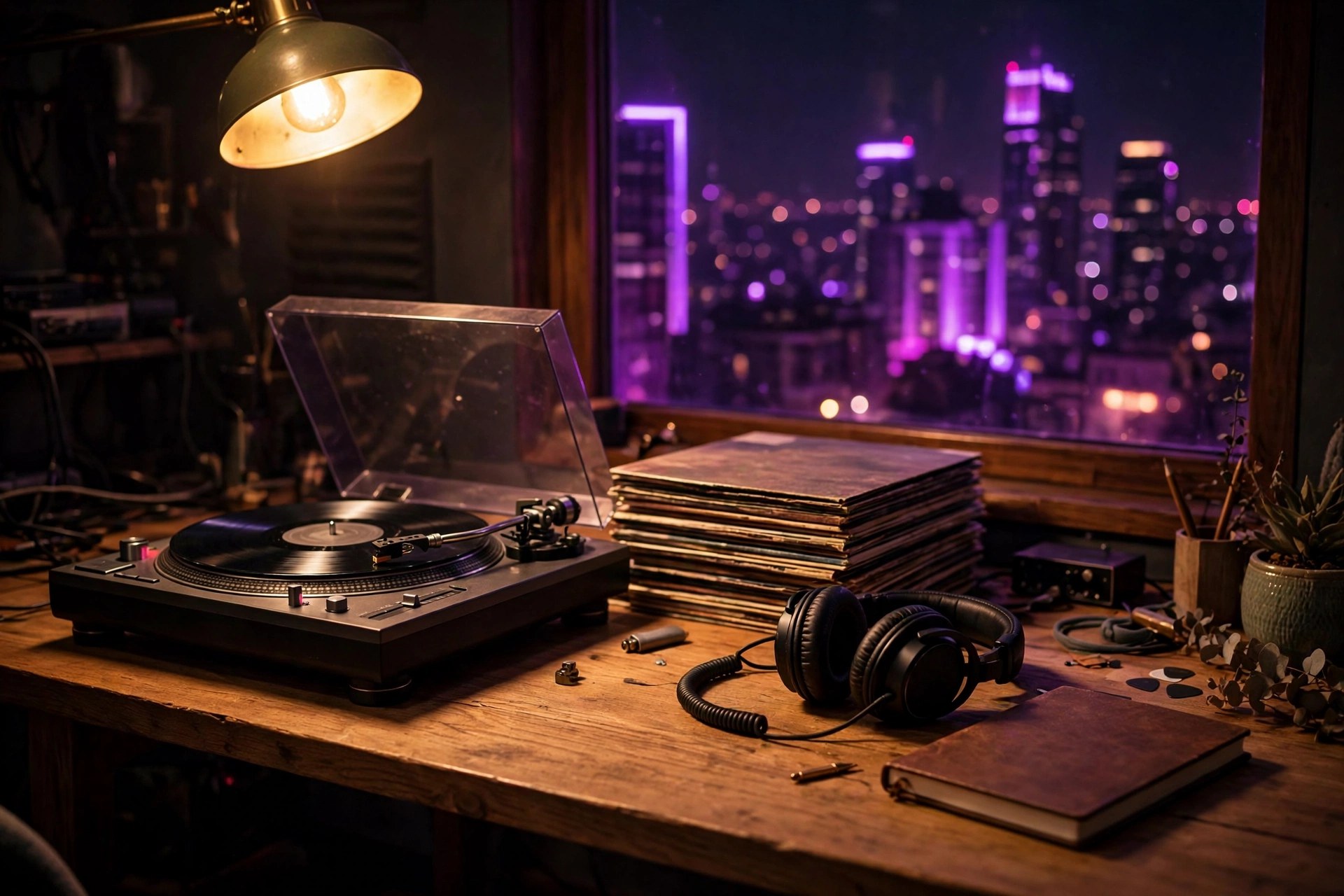 The lab at 2 a.m. — twelve Atlanta records, one long listening session.
The root: Dungeon Family. Goodie Mob's Soul Food (1995) is 18 of 19 tracks here — the only thing missing in the whole run is a 28-second skit called “Ceelo” that has no standalone upload anywhere, and honestly that gap bugs me in the best way. Organized Noize built those beats out of live funk and church organ and street noise, and the record still sounds like a porch in summer. Then Even in Darkness (2001), the whole Dungeon Family on one record, 14 of 14. The lesson for any crew making a record together: everybody brings their own weather, and the record works when nobody tries to flatten it into one sound.
The solo branches. Big Boi's Sir Lucious Left Foot (2010), 15 of 15 — the funkiest Outkast half proving he never needed the other side to carry a record. Killer Mike's R.A.P. Music (2012), 12 of 12 — El-P's production hitting like a door coming off its hinges, and Mike rapping like he finally found the room big enough for his voice. Then Run the Jewels 2 (2014), 11 of 11 — the two of them together, and the chemistry is the whole record. The lesson: a rapper's second act can be louder than the first, if the production gets out of the way and lets the voice do the work.
Trap's blueprint. T.I.'s Trap Muzik (2003), 16 of 16, then Gucci Mane twice over — Trap House (2005), 18 of 18, and The State vs. Radric Davis (2009), 20 of 20. Fifty-four tracks of proof that the drums got simpler and the records got bigger. That's the producer's lesson I keep coming back to: space is an instrument. The hi-hats do the talking when the kick stays out of the way.
The weirdos. Gnarls Barkley's St. Elsewhere (2006), 14 of 14 — CeeLo and Danger Mouse making a pop record out of a séance, and “Crazy” still sounding like it came from nowhere. Childish Gambino's Camp (2011), 13 of 13, and Because the Internet (2013), 19 of 19 — a comedian-turned-rapper building whole worlds out of references and internet static. The left-field record is the one that ages best. And Ludacris, Release Therapy, 14 of 14 — the showman, flow as percussion, a reminder that being fun on a record is a skill, not an accident.
That's the shelf now: twelve albums, 184 tracks, one 28-second hole where the “Ceelo” skit belongs. I'll keep an eye out for it — a shelf with one empty slot is a project, not a problem.
If this run has you in a rap mood, the crew's own rap voice is CADENCE — go listen to what he's building over here. Then tell me: of the twelve, which one gets your first late-night spin?
— Remy